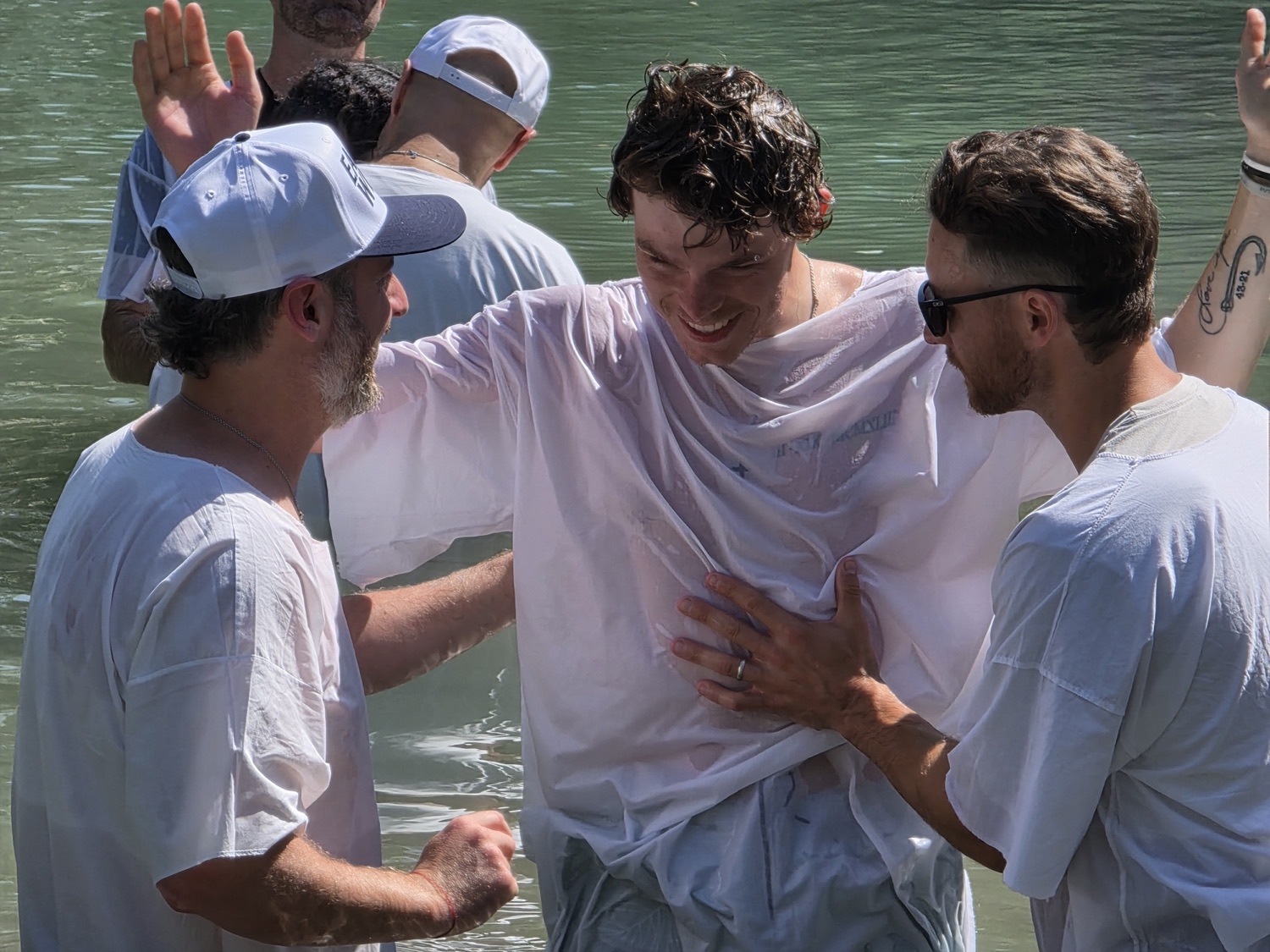
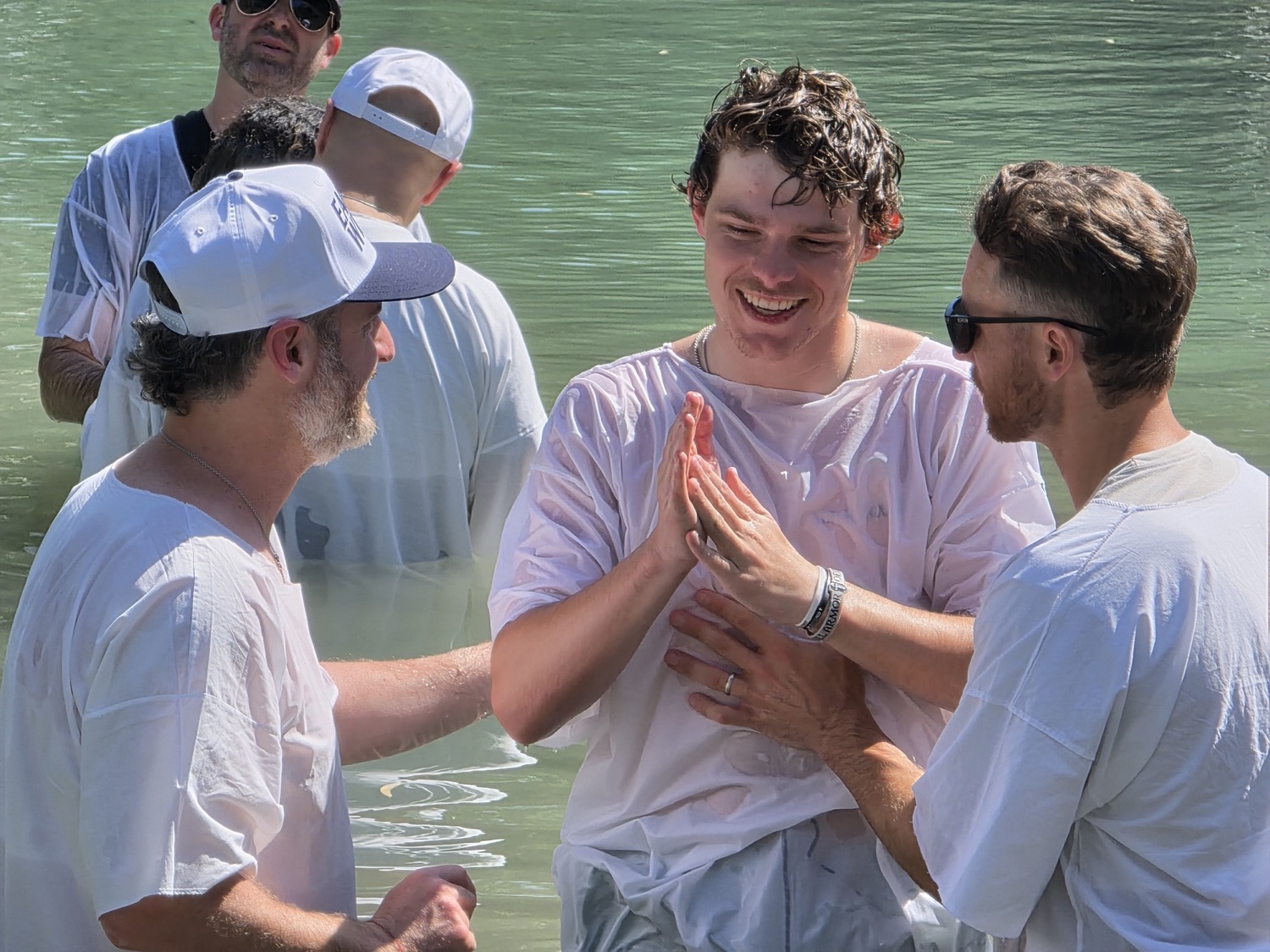
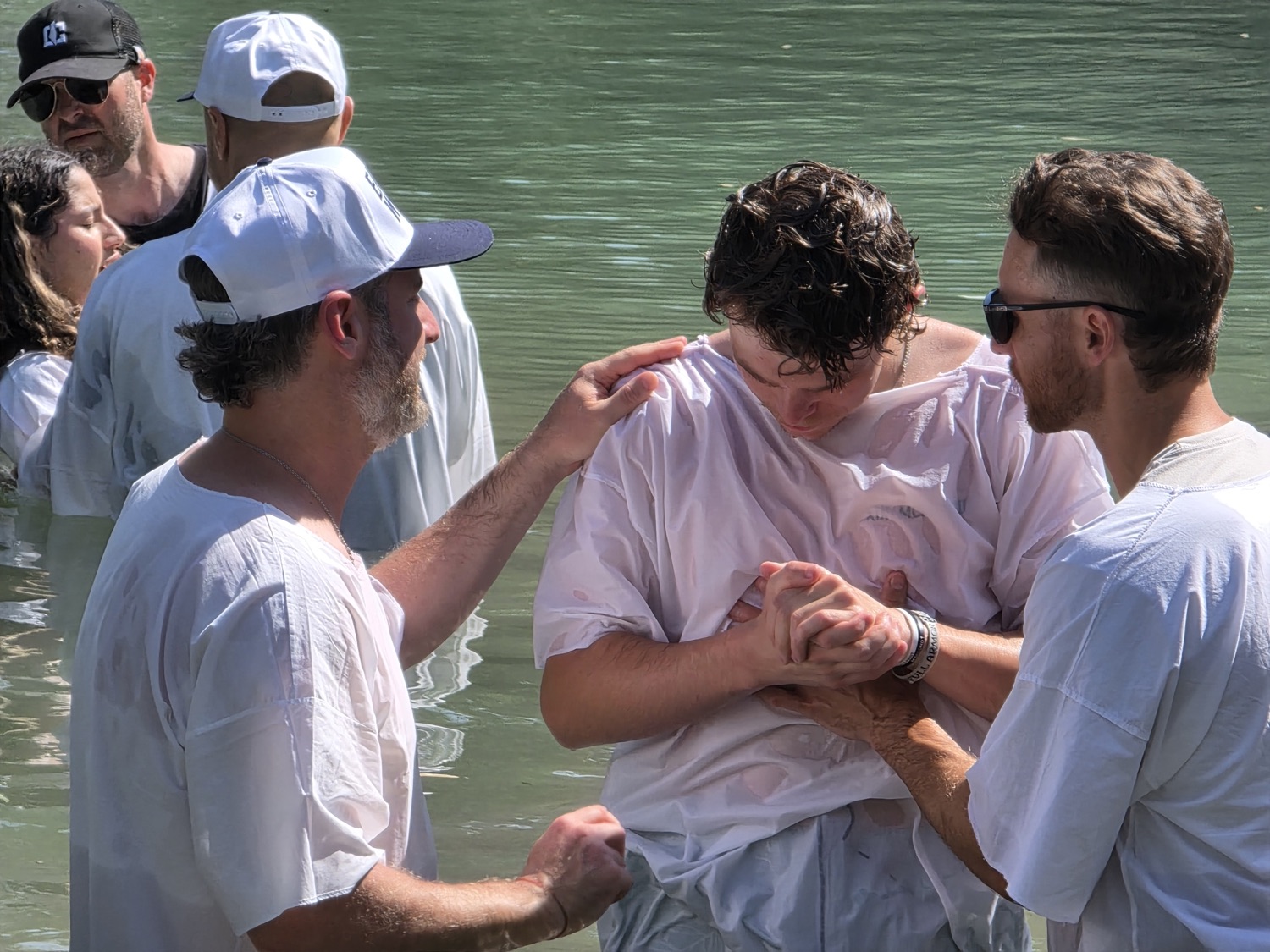
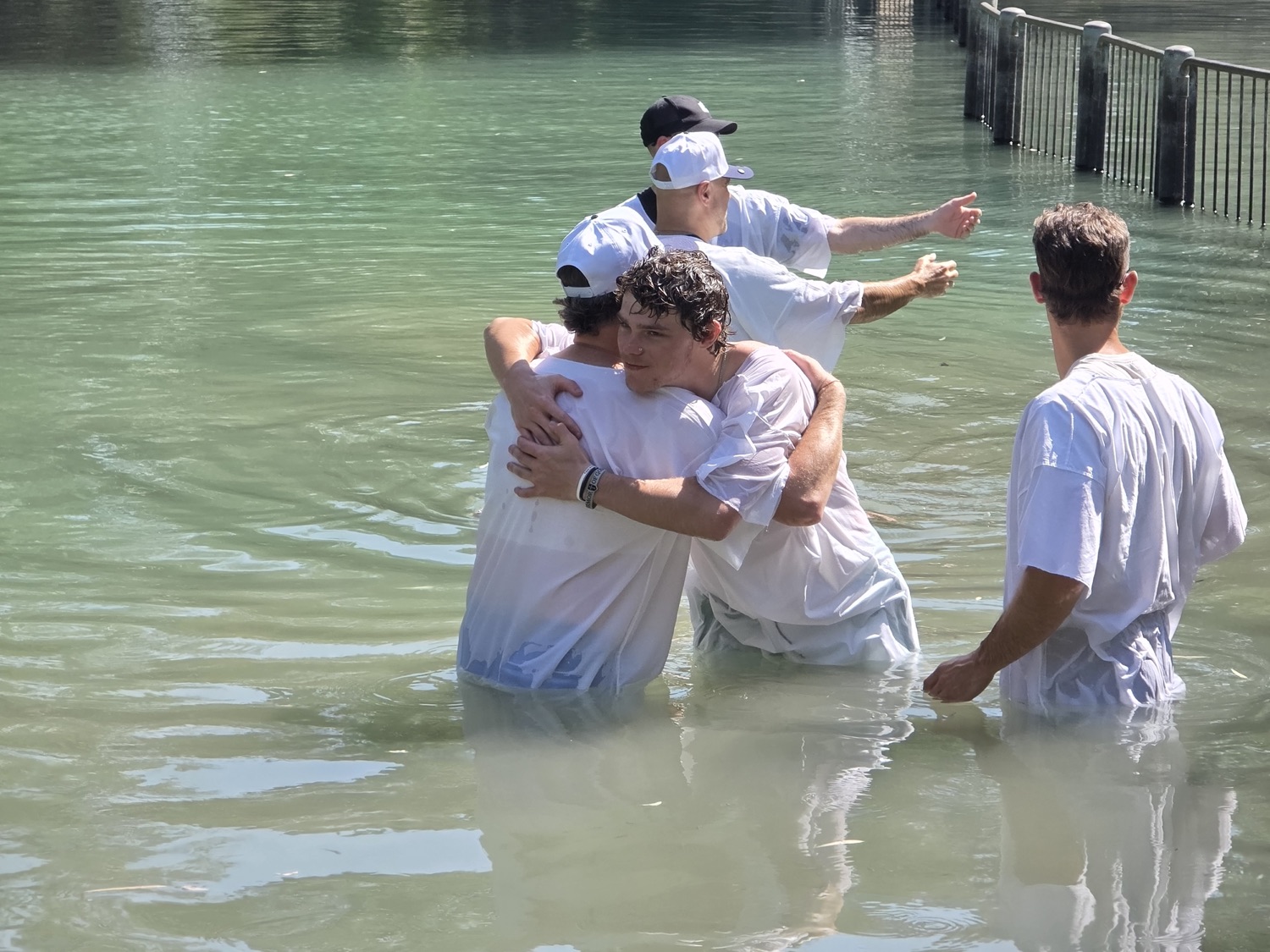
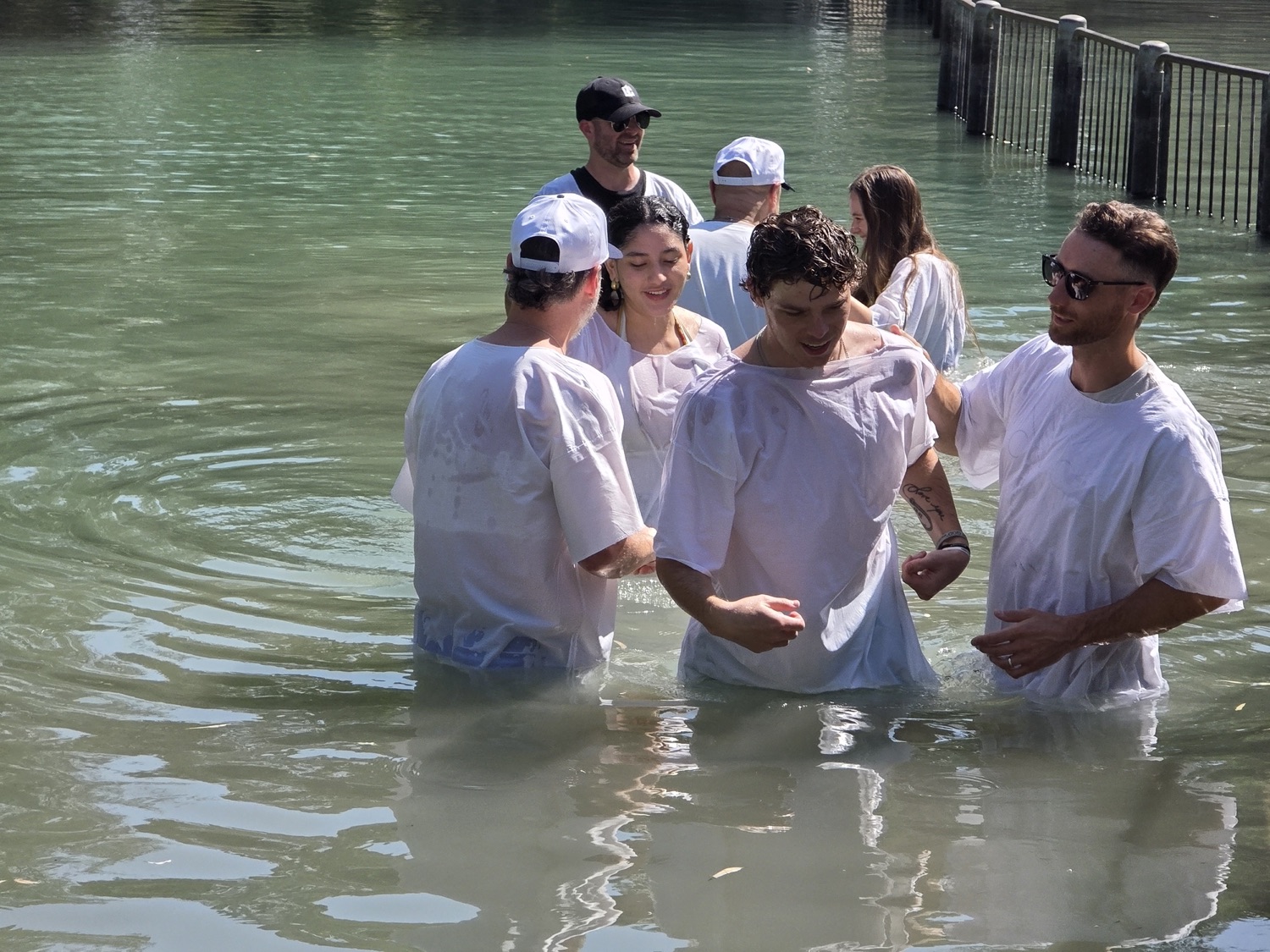
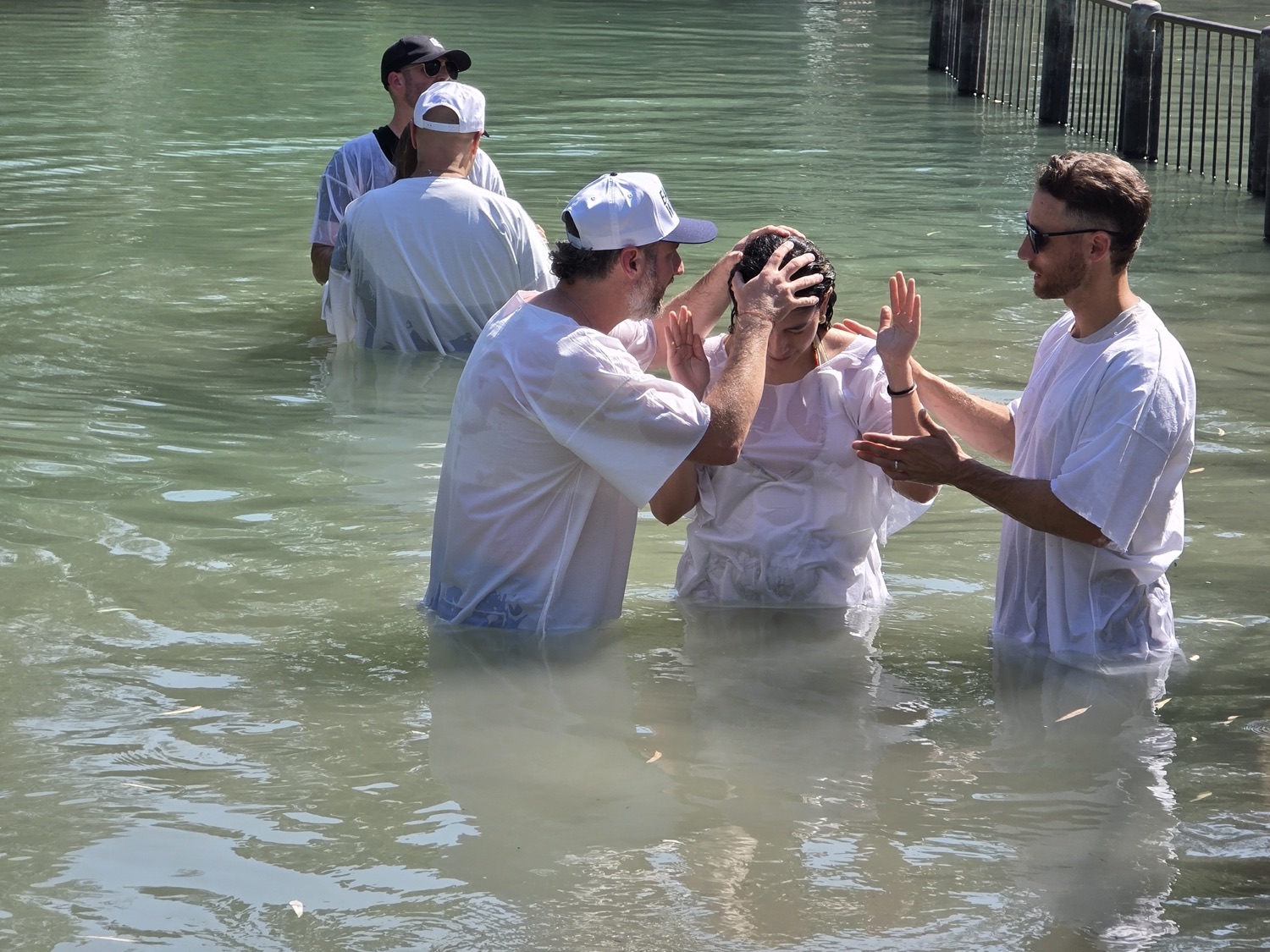
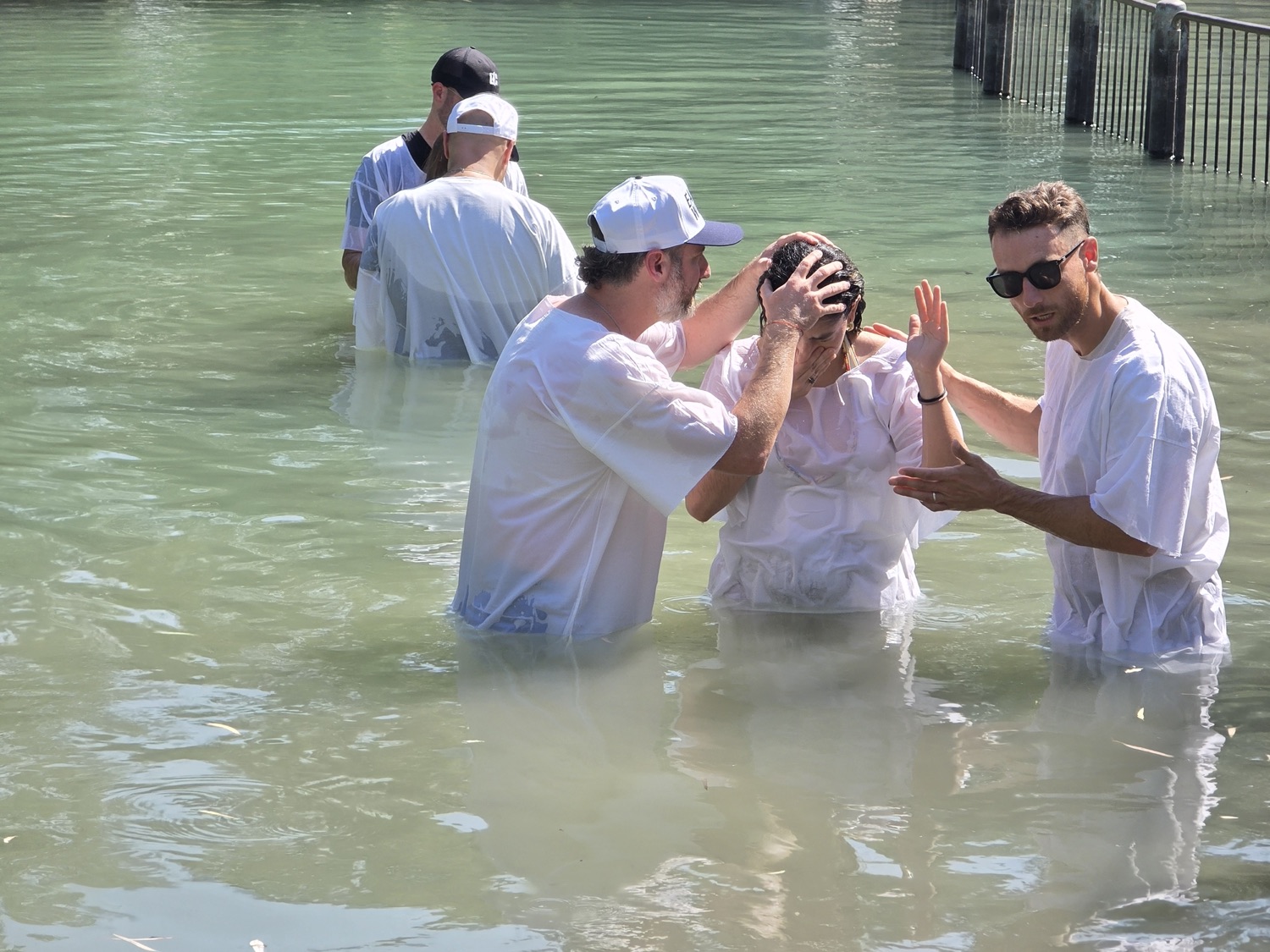
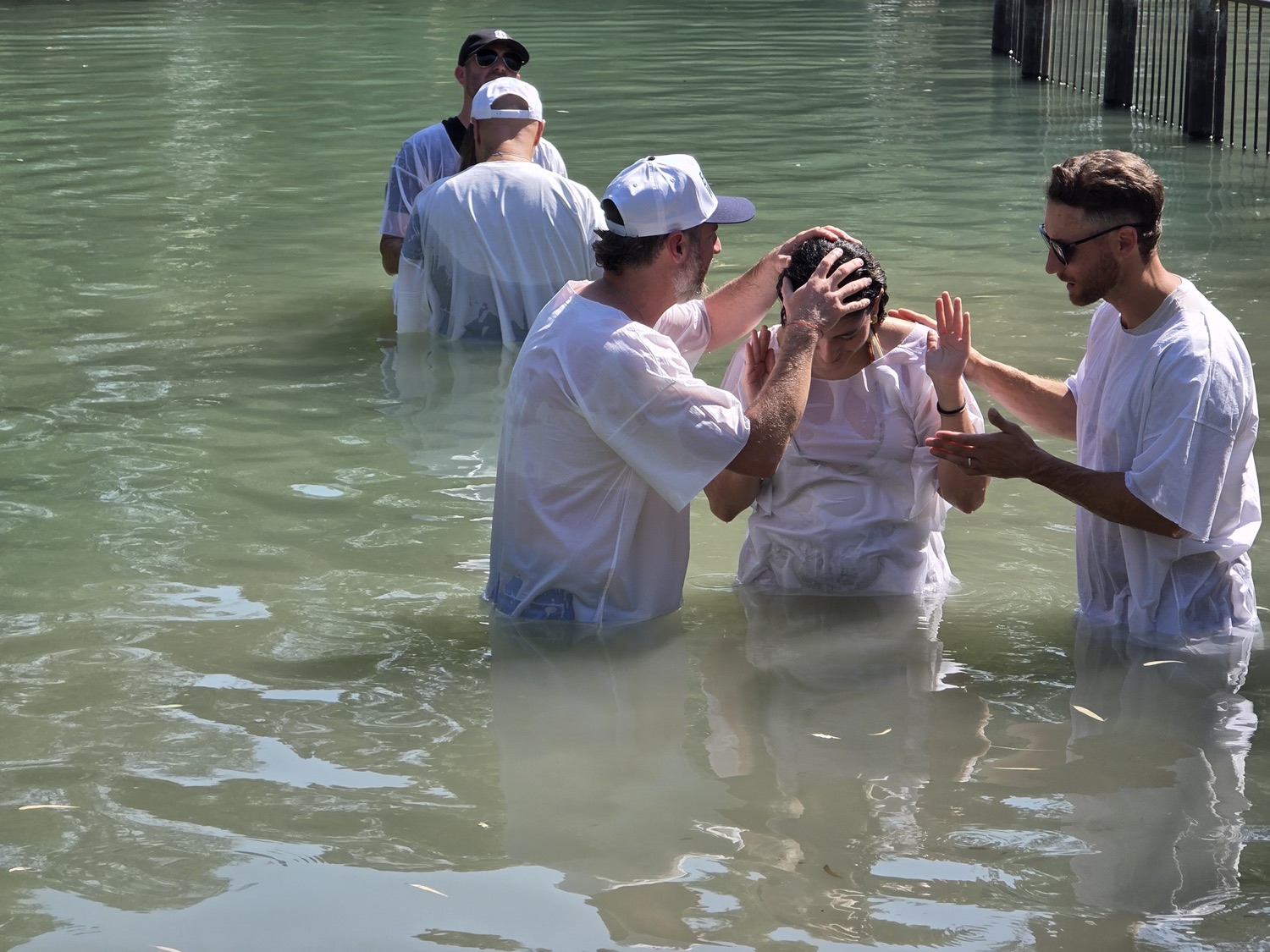
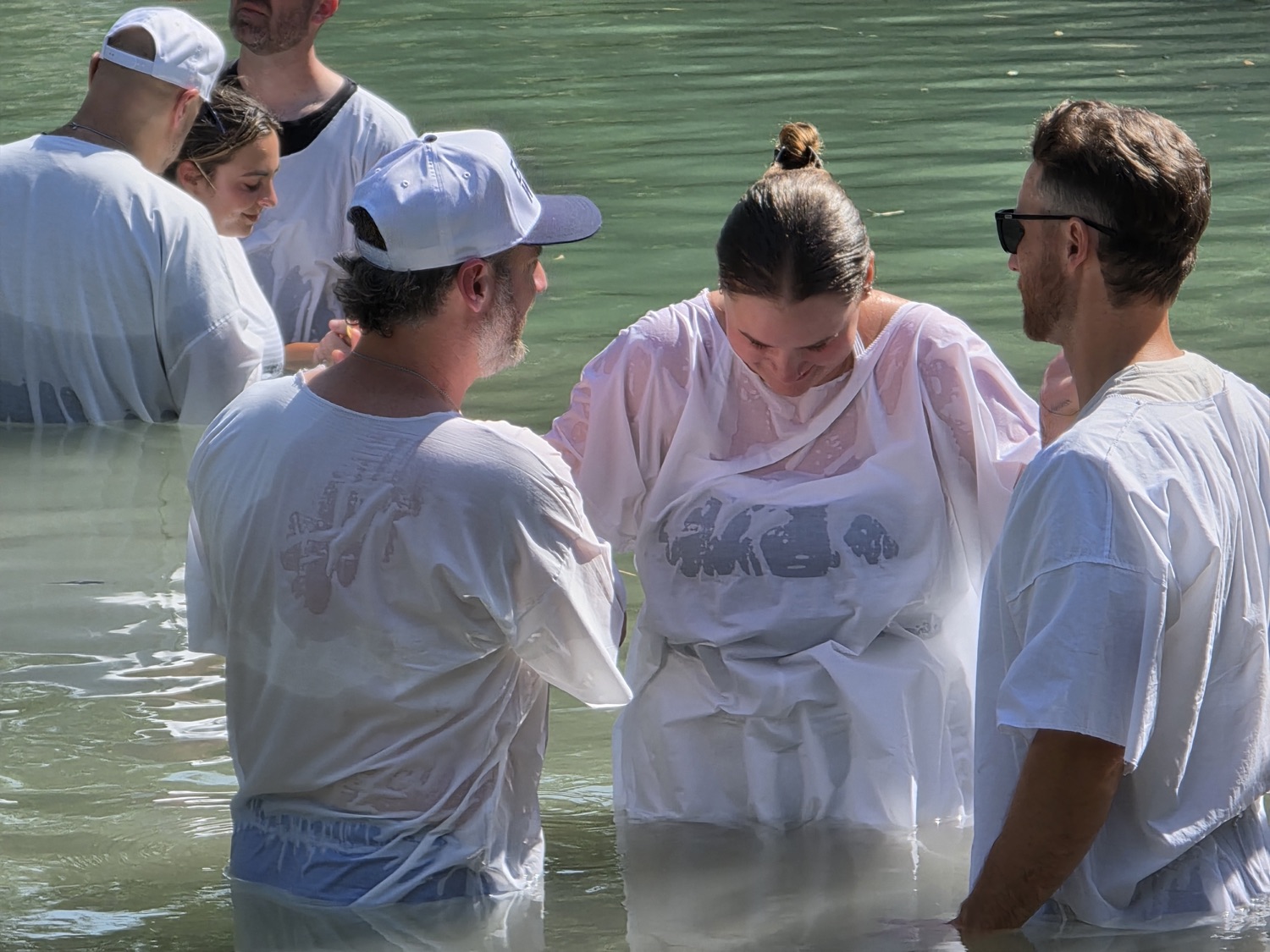
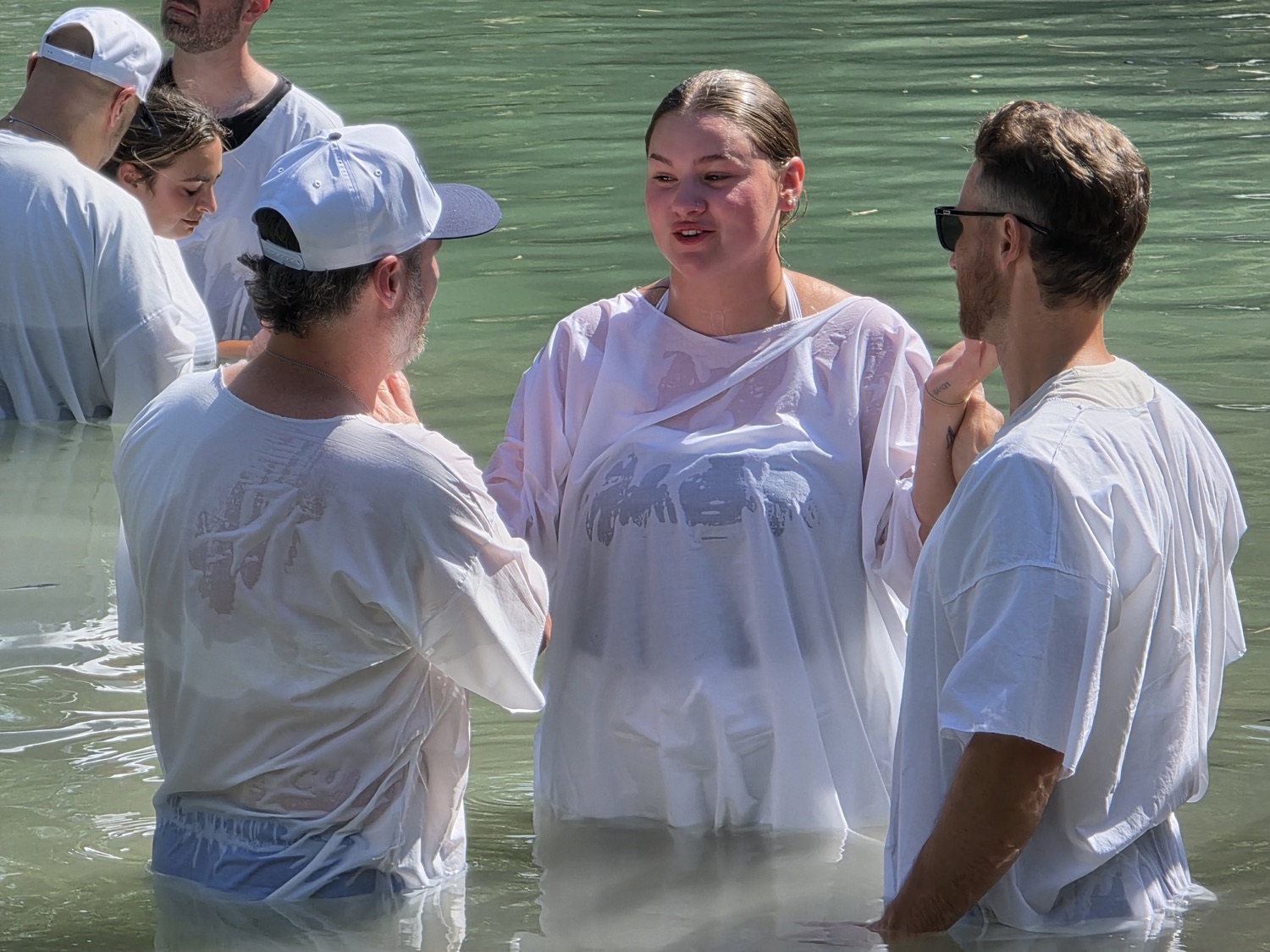
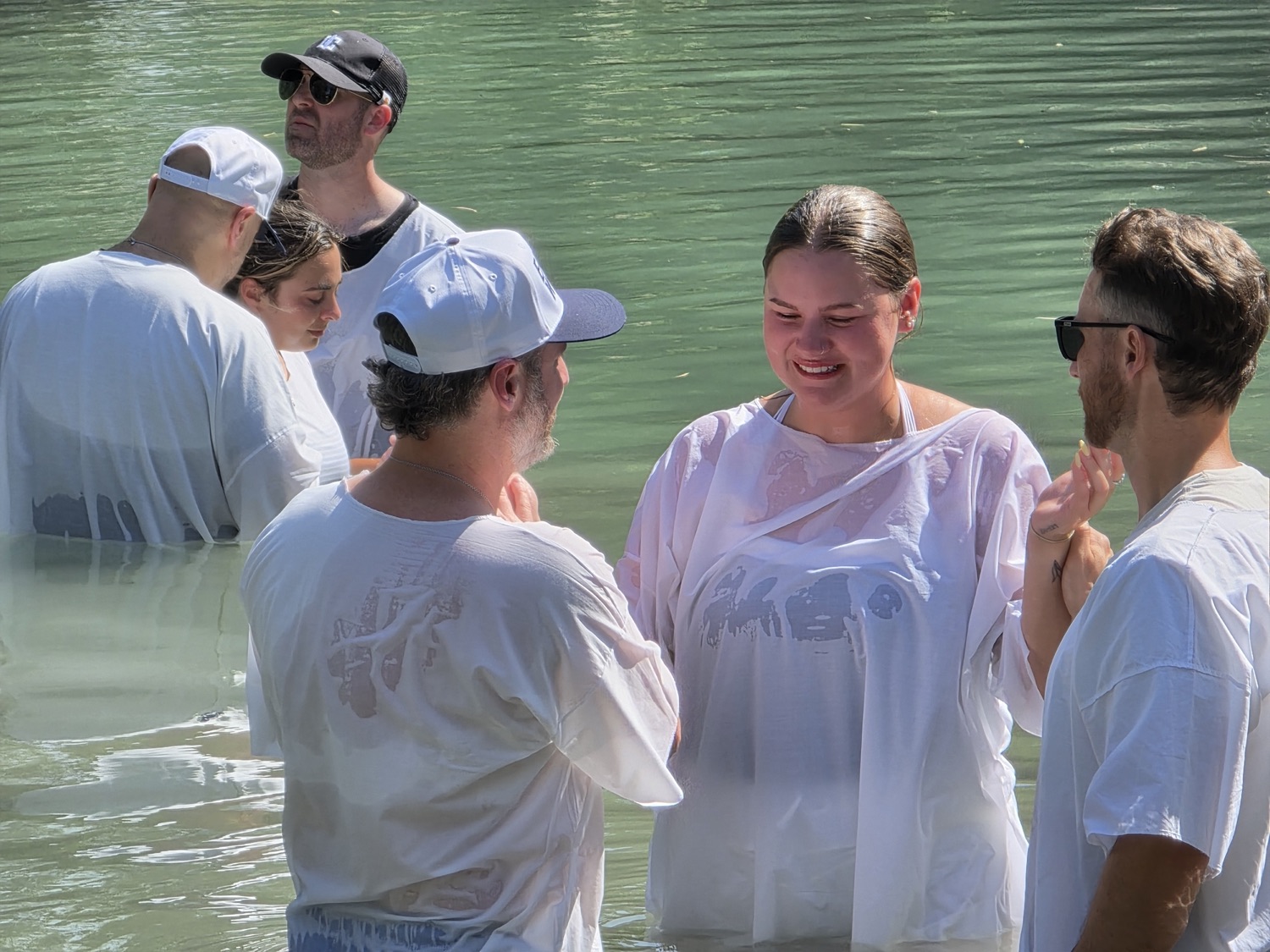
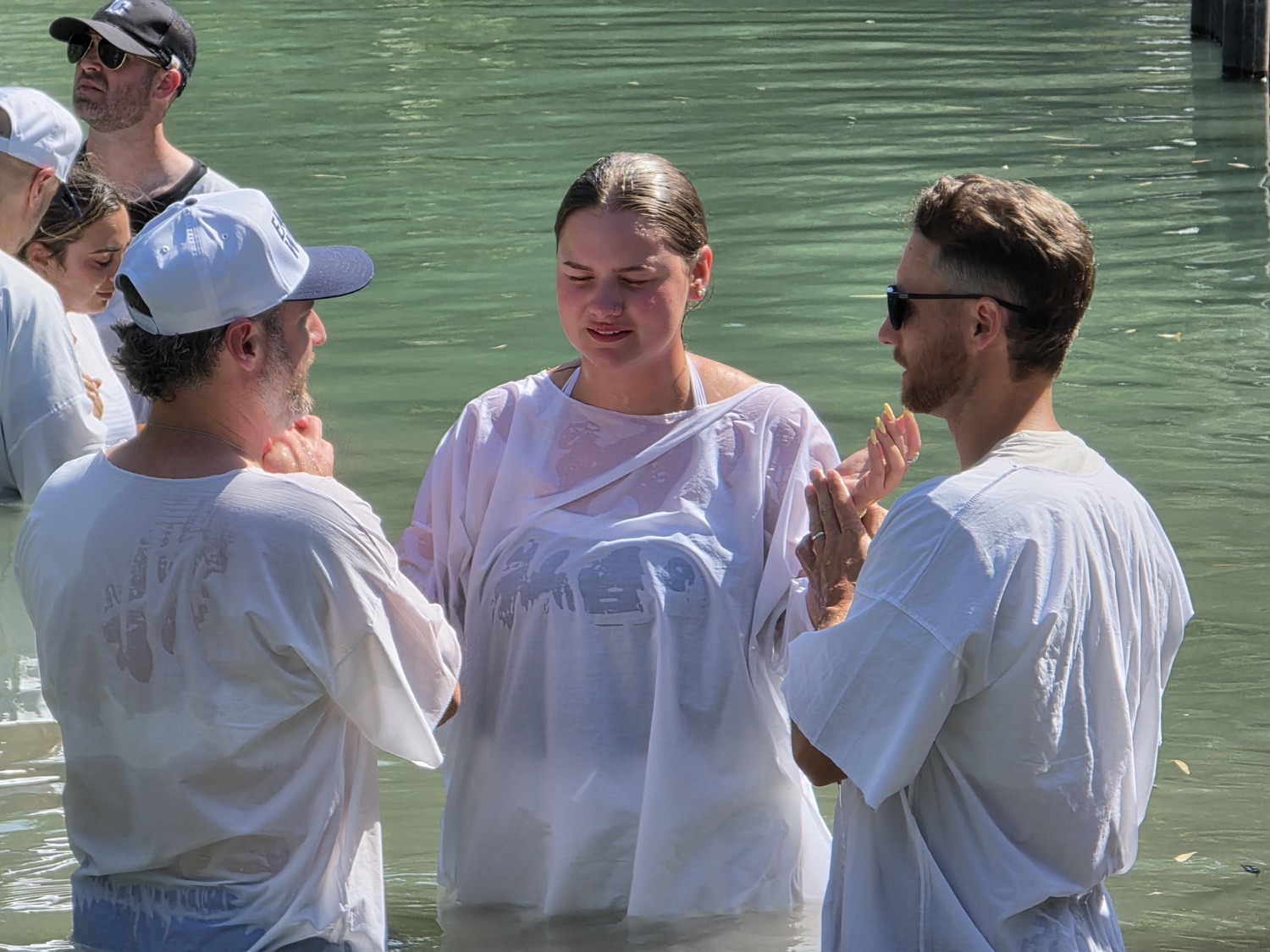
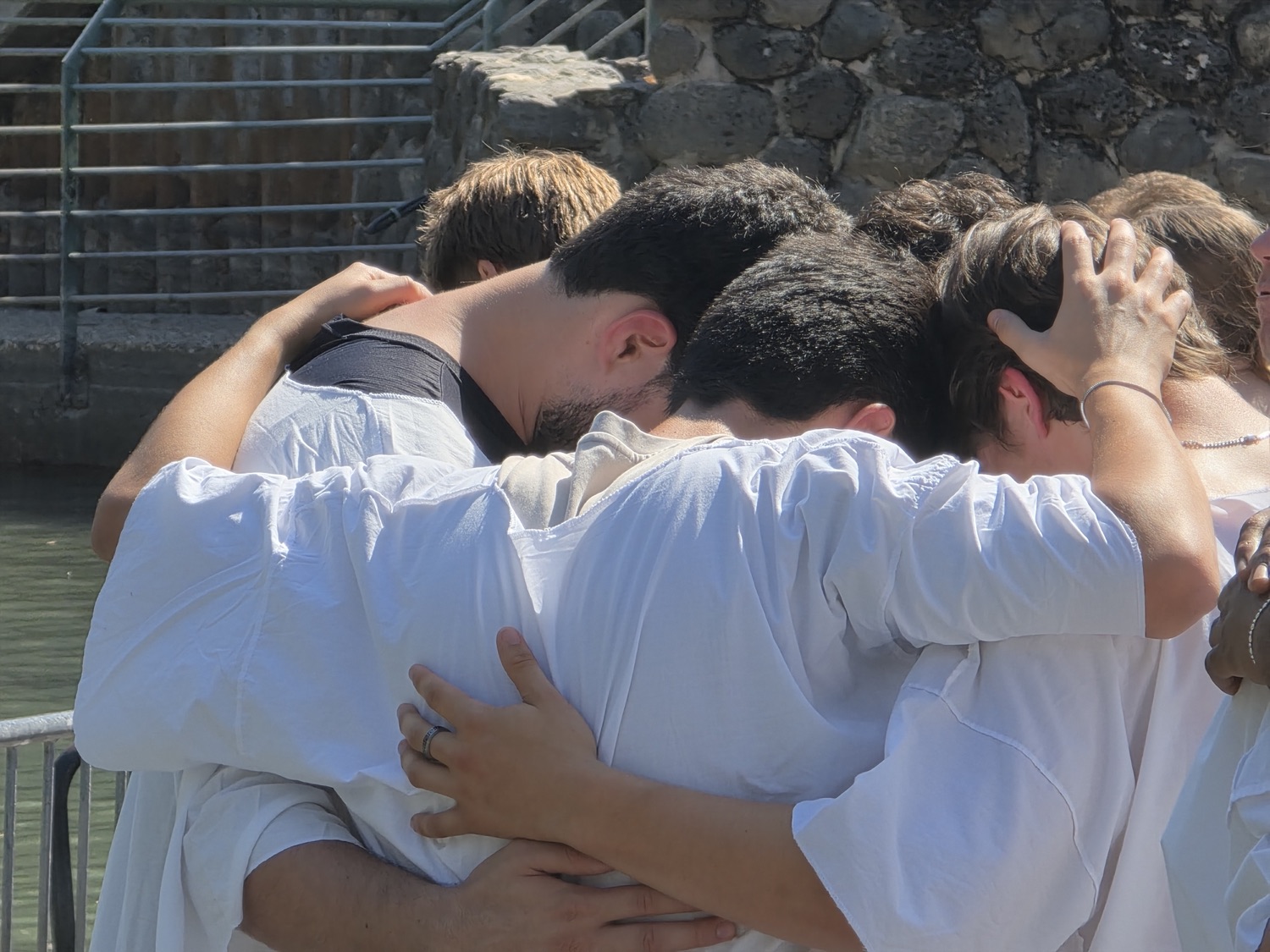
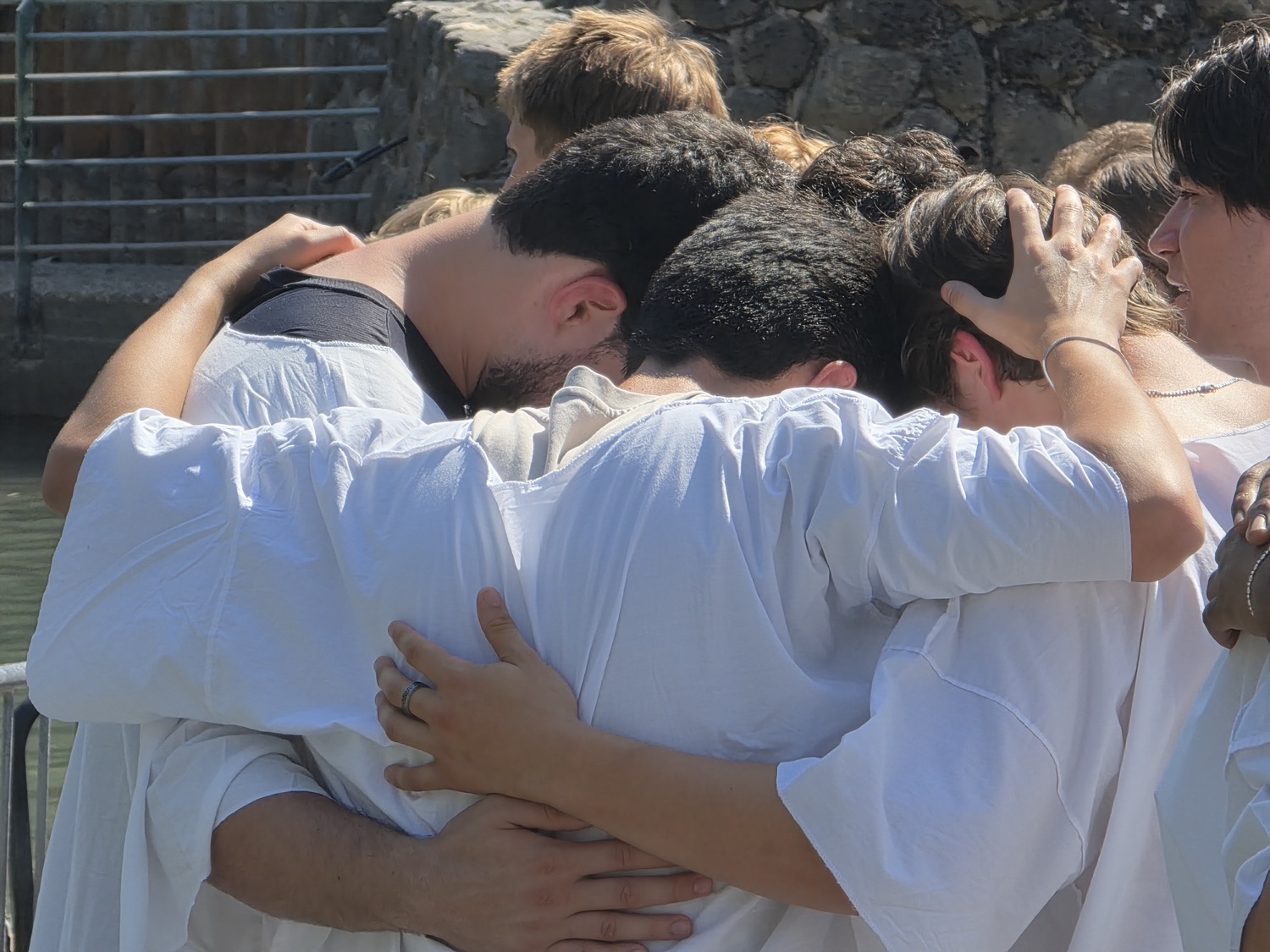
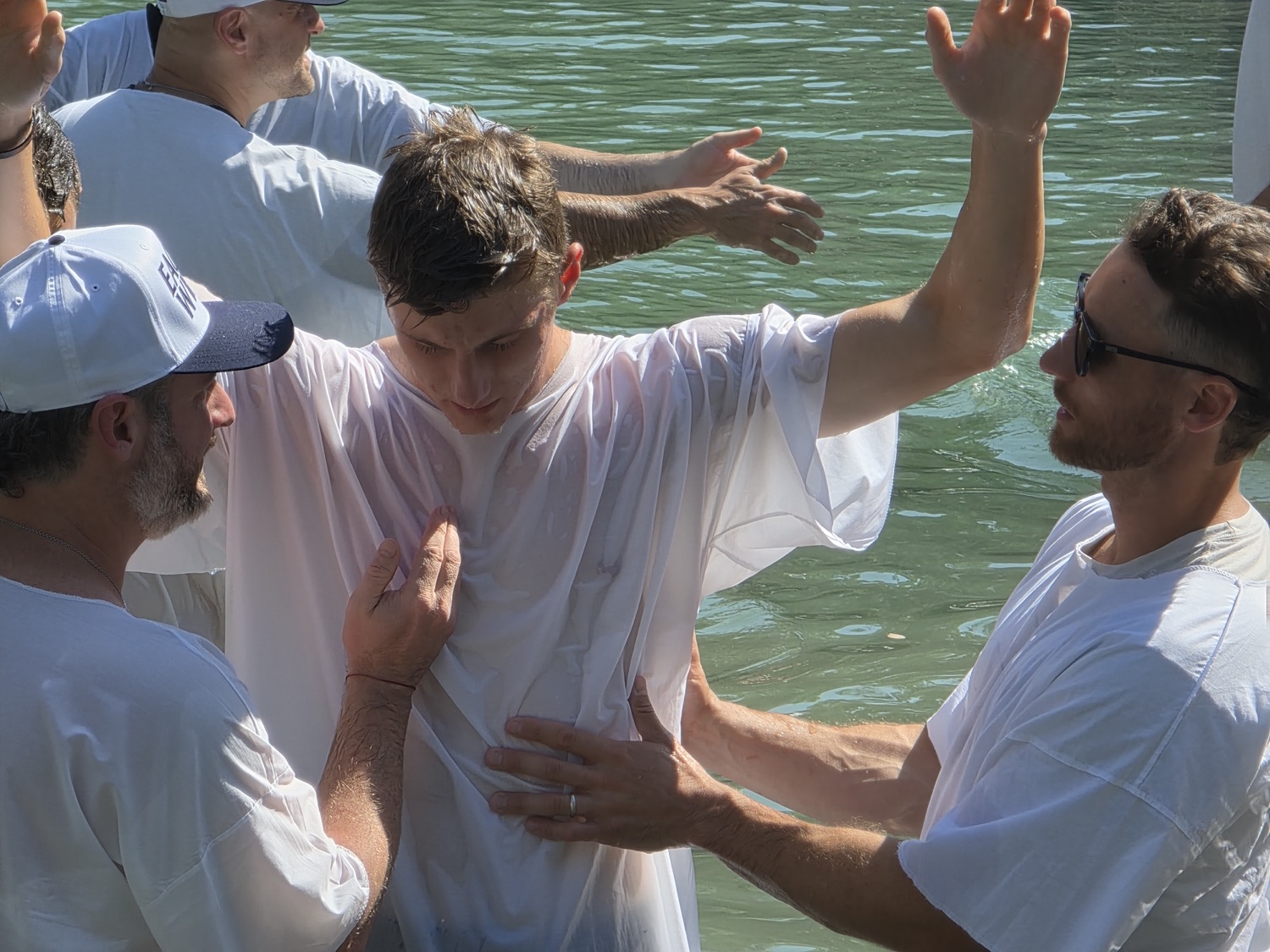
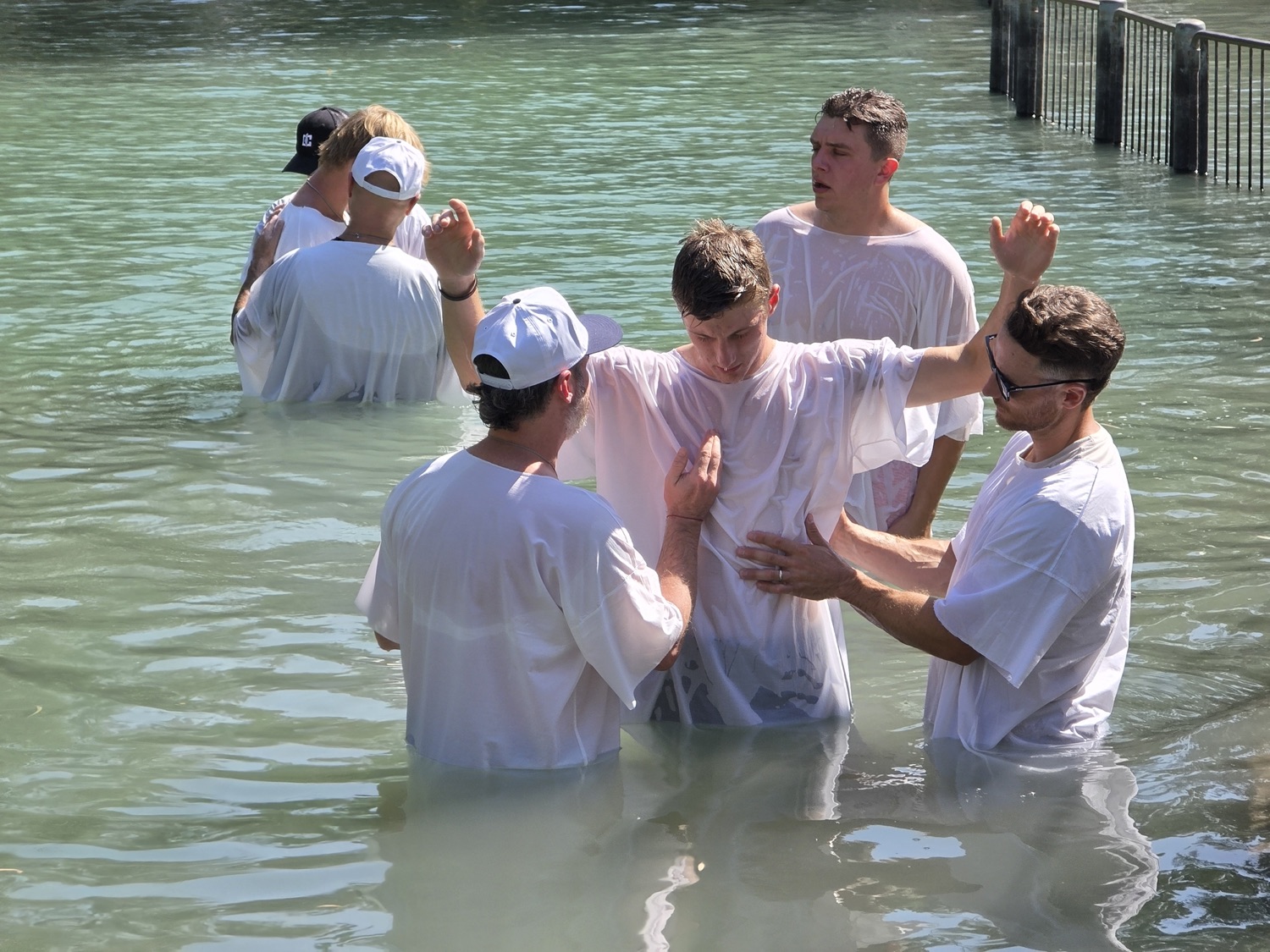
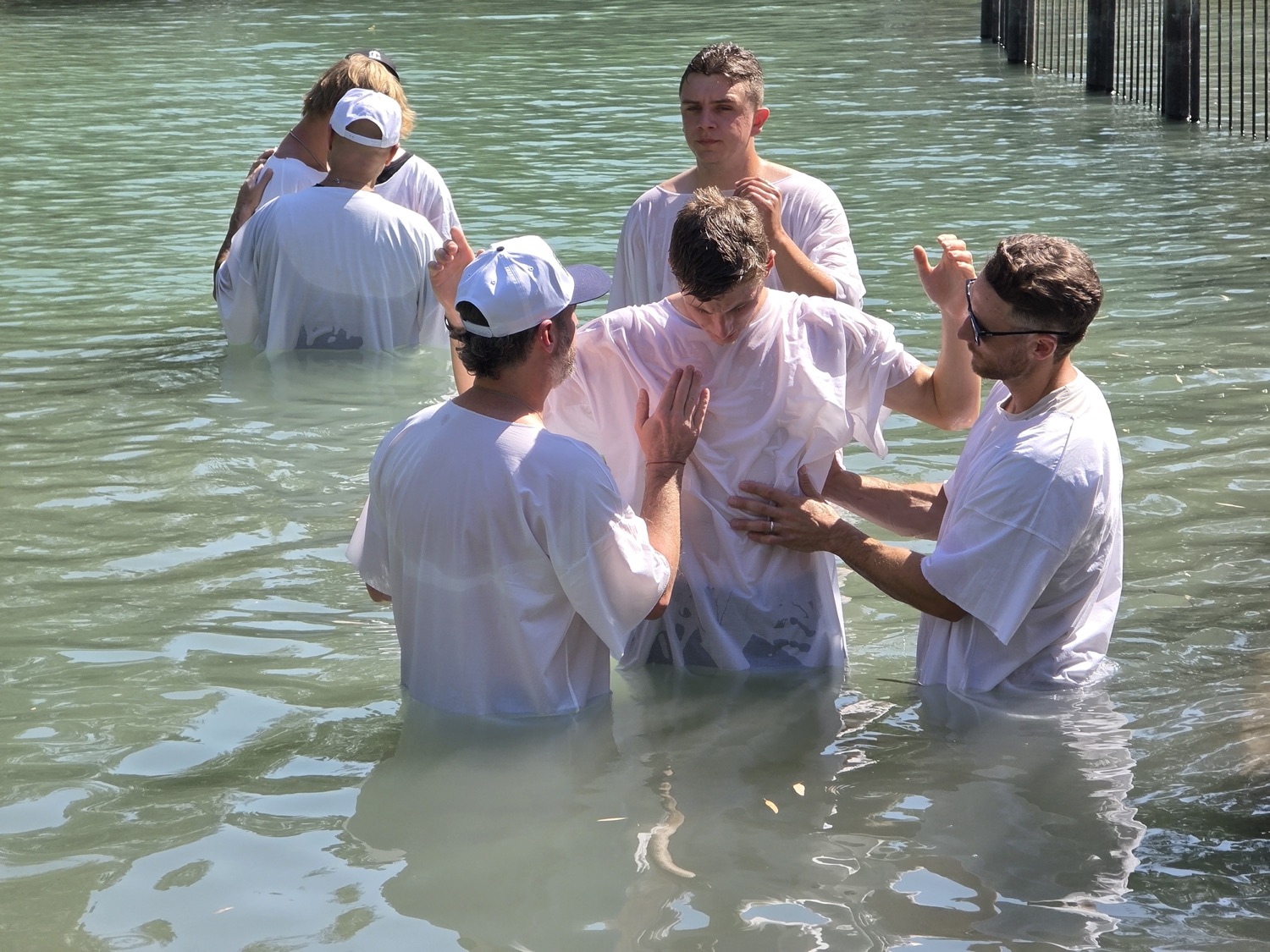
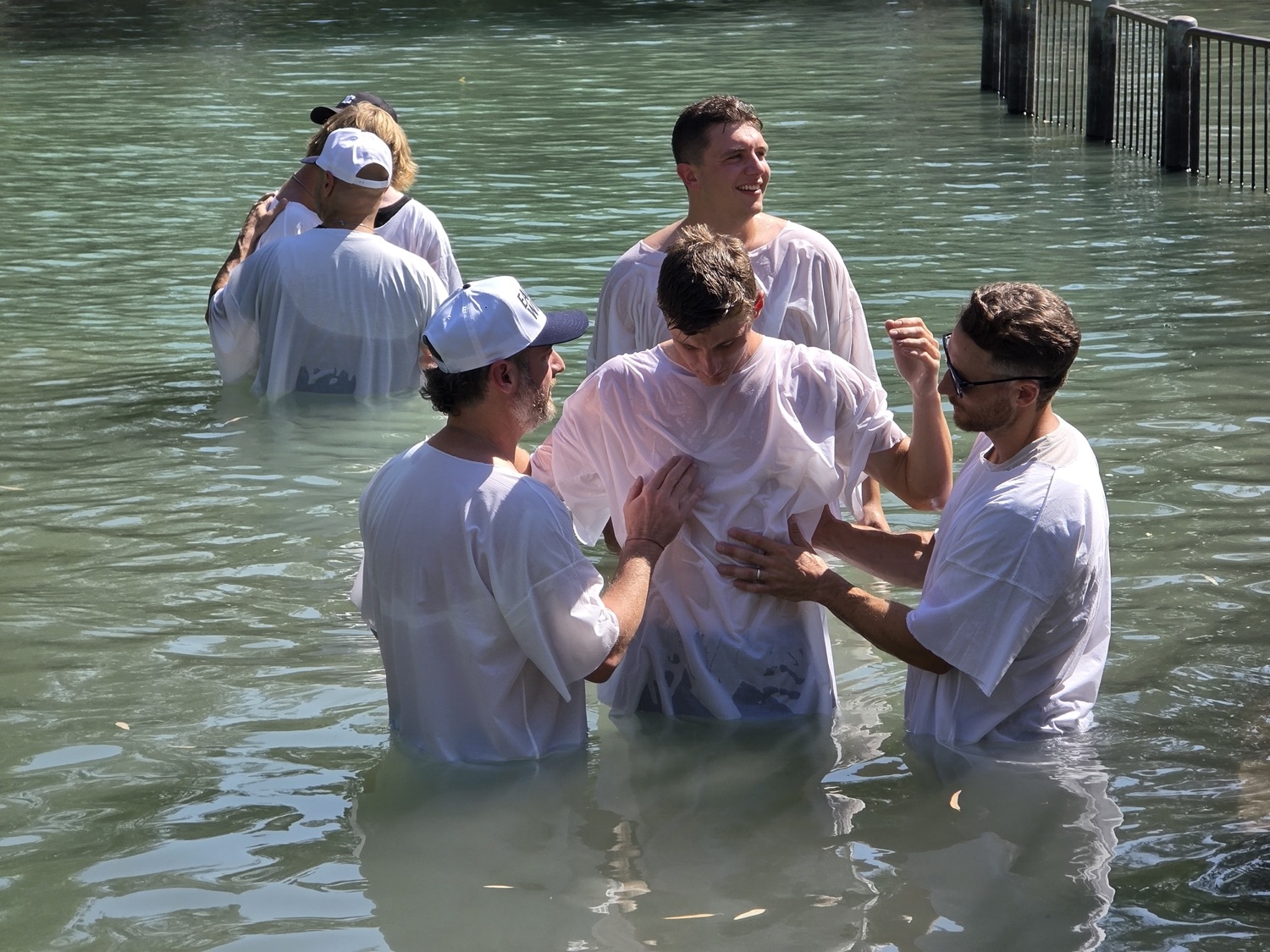
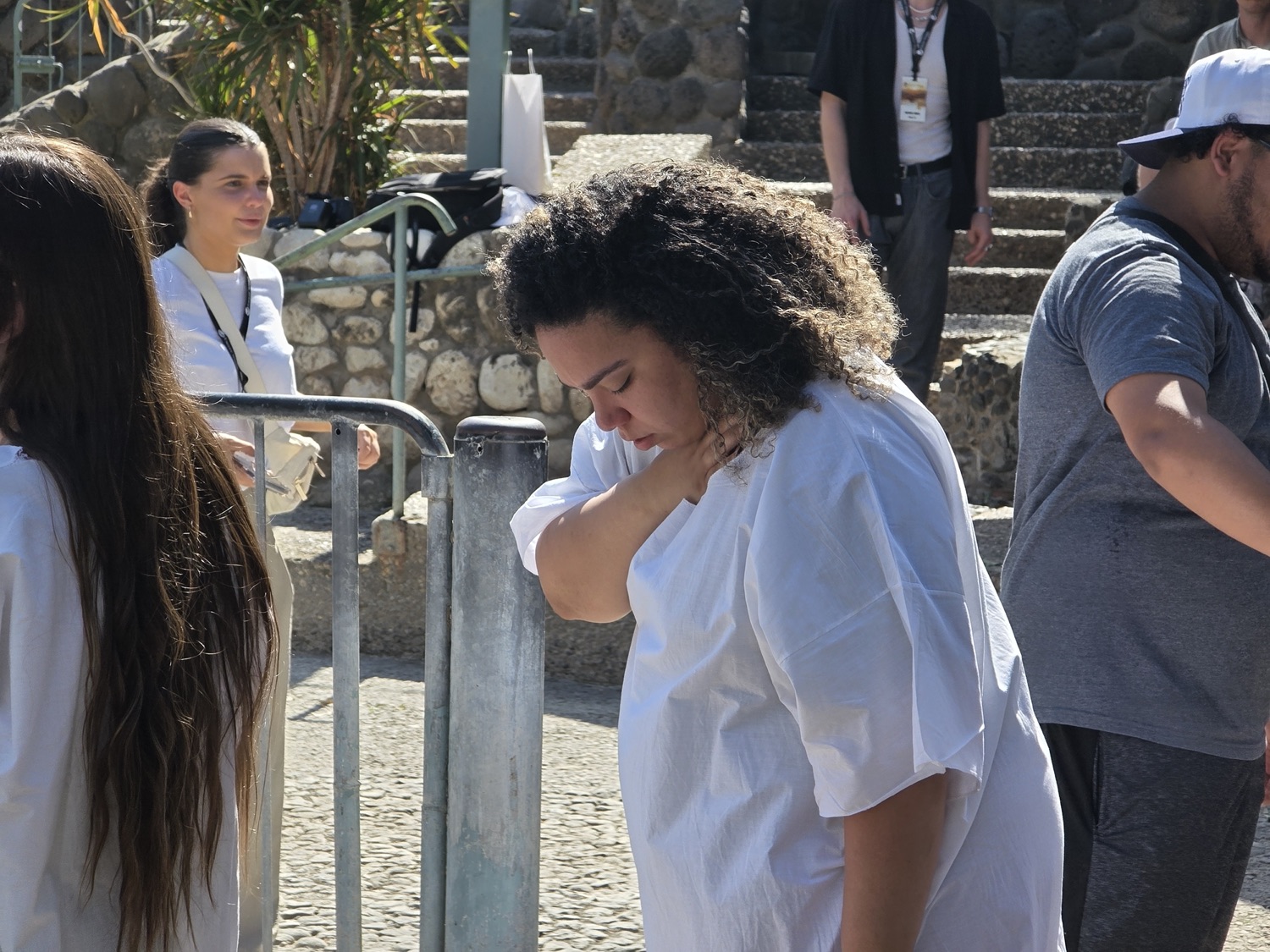
On Thursday the sixth of August we came down off the cliff of Arbel, spent the day walking the shore where the Kingdom was announced, and ended in the water. Some of you went in knowing exactly what you were doing. Some of you decided on the bus. One of you decided standing on the bank with your shoes already off.
I want to tell you what you actually stepped into, because it is older and deeper than most people are ever told, and it did not begin with John.
Baptism is not a Christian invention that replaced something Jewish. It is a Jewish practice, with a Hebrew name, that Jewish people had been doing for centuries before John ever stood in that river.
On the third day of creation God said, “Let the waters under the sky be gathered together into one place.” The word there is מִקְוֶה. The first mikveh in the Bible is the sea itself.
By the time of the Second Temple, immersion was ordinary life. There are ritual baths cut into the bedrock all over this land, in Jerusalem, at Qumran, in the Galilee, in private houses. And at the southern steps of the Temple Mount, where you stood, there is a whole field of them. No pilgrim went up to the House of God without going down into the water first. Down, then up. Always in that order.
The Greek word the Gospels use, baptizo, means exactly that: to dip, to plunge, to submerge. When Greek-speaking Jews translated their own Scriptures, baptizo is the word they reached for. So when John came baptizing, no one in that crowd asked what the word meant. They had been doing it their whole lives.
The law around a mikveh is precise, and every detail of it says something.
Water you drew and poured does not make a mikveh. It has to come from heaven or out of the ground. You cannot manufacture the thing that cleans you. That is the whole theology of it, built into the plumbing. And it is why John is standing in a river and not beside a barrel.
A ring. A bandage. A knot in your hair. Any of it and the immersion does not count, because the water did not touch all of you. You go in with nothing on and nothing hidden. Every one of you who walked into that river in a soaked white shirt was acting out a sentence: there is nothing between me and God that I am still holding on to.
There is no partial immersion. You cannot keep a hand dry. The Hebrew mind does not do halves here, and neither does the Gospel.
If everyone was already immersing, why did crowds walk out into the desert to watch a man do it in a river?
Because John changed three things, and all three were provocations.
He moved it. Out of the courtyards of the Temple and into the wilderness. If you wanted to be made clean you were supposed to go up to Jerusalem. John set up in the opposite direction and made people walk away from the city to get right with God.
He changed what it was for. A mikveh dealt with ritual purity, a state you fell into and climbed out of, often through no fault of your own. John tied the water to something else entirely.
And he did it to people. This is the detail almost everyone misses. A mikveh is something you do to yourself. You walk down the steps alone, you immerse yourself, nobody assists you, nobody has authority over your body in that water. John took that ancient private act and made it something one person does to another. You are lowered. You are lifted. You cannot baptize yourself.
That is why they sent a delegation to interrogate him about who he thought he was. He was doing to Israel something Israel had only ever done to itself.
Of all the water in this land, John chose the Jordan. He was standing in the most loaded river in the Bible, and every person there knew the stories.
This is the river Israel crossed to come home. The priests carried the Ark into the water, the flow stopped, and a whole nation walked into the promise on dry ground. Twelve stones came out of the riverbed and were stacked on the far bank so that children would ask what they meant.
This is the river where Elijah struck the water and went up, and Elisha came back through it alone wearing his master's cloak, carrying a double portion.
This is the river where Naaman the Syrian general, furious at how ordinary it was, finally went under seven times and came up with the skin of a child. A foreigner. In this water.
And it is the border. The Jordan is the line between wilderness and inheritance, between wandering and arriving. You do not swim along it. You cross it.
So when John stands in the Jordan calling Israel to be immersed, he is not picking a scenic spot. He is putting the nation back at the crossing place and saying: come out of the wilderness again. Enter again. Do the founding thing again.
And here the story breaks. A man with nothing to repent of gets in the queue with people confessing everything, and John tries to stop him.
He did not need the water. He got in anyway, at the front of a line of sinners, in the river where the nation had crossed over. And the moment he came up, the heavens tore open.
Mark uses a violent word for it. Not opened, torn. The same tearing that happens to the curtain of the Temple at the end of his life. The first time God rips the sky, the second time God rips the veil. Both times something that separated is destroyed from the top.
You were loved before you were useful. That is the order, and the water is where it gets said out loud.
Paul, a Pharisee who understood mikveh from the inside, later wrote the sentence that explains what your body was saying:
Going under is a burial. You are held under by someone else, in water you did not make, with nothing between you and it. Coming up is a resurrection you had no part in arranging. Somebody else lifts you.
At the ancient ritual baths you can still see the divider running down the middle of the steps, so that the one going down and the one coming up never touched. You go in one person. You come out on the other side. The architecture itself refuses to let you climb back out the way you came.
That is what the Jordan did to you on Thursday afternoon, while the rest of us stood on the bank singing over your heads.
You cannot be baptized twice, and you do not need to be. But you can remember it, and remembering is a Jewish discipline, not a feeling.
The stones came out of the riverbed for exactly this reason. So that when your children ask what these stones mean, you have something solid to point at and a story to tell. Find your stone. Tell somebody what happened to you in that water while you can still smell the river on it.
Every week I write a letter from the Golan to people around the world who pray for this Land. You have stood on the ground now. You know what you are praying for.